Industrial flexible ducts: design, uses and custom solutions
Maintaining equipment in a precise position or isolating delicate wiring requires a technical solution of absolute reliability. This is where flexible conduits come in; they structure your installations by combining ease of handling with rigorous support. Far from simple conventional hoses, these articulated structures guide, protect, and support your most sensitive components with remarkable precision.
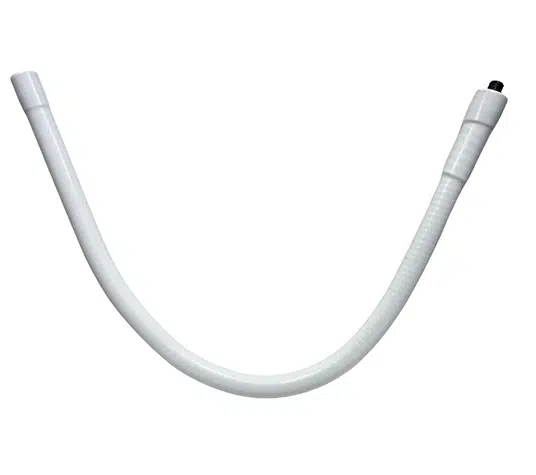
How flexible conduits meet the needs for protection, support, and positioning
Definition and main functions of an industrial flexible duct
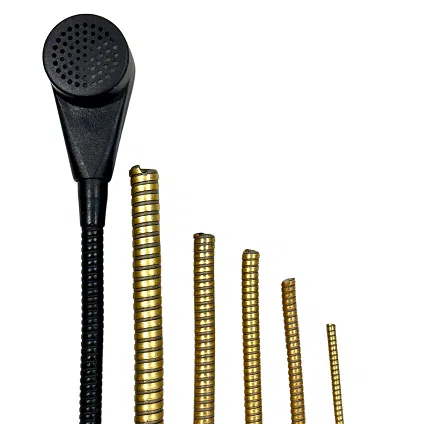
Technical installations often require a balance between mobility and stability. Industrial flexible conduits, essentially semi-rigid ducts with shape memory, perfectly meet this challenge. They fulfill several fundamental roles in daily operations. Acting as a flexible protective sheath, they effectively insulate electrical wires or optical fibers from shocks and twisting. When used as a flexible positioning sheath, they allow for the orientation of a sensor or camera and then instantly lock that position. Finally, they provide excellent sheathing for industrial support, capable of bearing a specific weight without ever sagging under the effect of gravity.
When is a semi-rigid solution preferable to a simple flexible one?
A standard flexible hose immediately falls back into place as soon as it's released. A semi-rigid , on the other hand, retains the exact angle and bend the user has just given it. This property proves essential when an operation requires keeping hands free. Whether it's directing a beam of light towards a complex work area or holding a microphone at ear level, shape memory becomes indispensable. Understanding how to choose an industrial flexible hose essentially hinges on this need for spatial stability after handling.
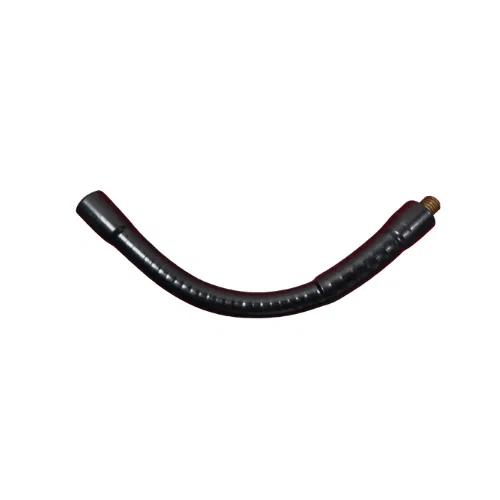
Flexible spiral ducting: characteristics, advantages and areas of application
The technical advantages of a flexible spiral sheath
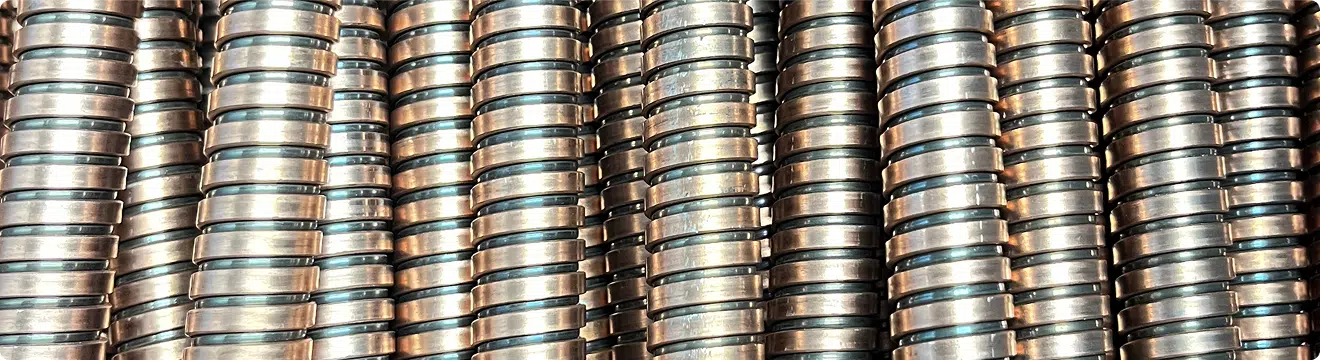
The unique architecture of a flexible spiral duct relies on a crisscrossing of metal wires. This mechanical design guarantees remarkable resistance to crushing while allowing repeated bending without material fatigue. Internal friction between the coils generates the rigidity necessary to maintain the desired shape. This cutting-edge technology also allows for the creation of a custom-made flexible ductsimply by adjusting the coil tension, wire diameter, or the materials selected, such as steel, brass , or stainless steel. The end user then benefits from perfectly controlled flexibility, free from any unwanted springback.
Audio, security, lighting, medical, instrumentation, mechanics: concrete professional applications
Each industry faces its own specific constraints. For example, a flexible duct for lighting allows the lamp of a machine tool to be precisely directed to a machining area. In hospitals, a flexible duct for medical equipment keeps a control screen or a respiratory device close to the patient. In laboratories, flexible ducting for instrumentation stabilizes measuring probes with millimeter precision. The audio industry uses these same structures to design the goosenecks of conference microphones. The security and mechanical engineering sectors, for their part, incorporate these elements to guide remote controls and to protect various beams in highly constrained environments.
What is the difference between flexible sheathing and flexible metal sheathing?
Differences in structure, behavior, and use
Confusion often arises when defining specifications. The real difference between a flexible duct and a flexible metal duct lies in their dynamic behavior. The semi-rigid maintains its shape independently. A flexible metal duct, often described as corrugated or exhaust hose, remains flexible under all circumstances. Its primary function is to transport fluids under pressure, absorb strong vibrations, or protect cables on constantly moving machinery. It offers no spatial support.
When to opt for a specifically metallic solution
If your project involves absorbing intense vibrations, transferring hot gases, or supporting continuous cyclic movements, shape memory becomes ineffective. For such situations, it's best to explore our solutions dedicated to conveying and dynamic protection. Clearly separating these uses ensures the longevity of your installations while preventing the risk of premature mechanical failure.




How to choose an industrial flexible duct that meets your specifications
Technical criteria to compare before launching a project
Developing such a project requires careful analysis of several variables. The inner diameter logically determines the cable routing capacity. The outer diameter directly influences the overall size of the system. The total length defines the equipment's reach, but it also significantly impacts the holding force. Indeed, the longer the arm, the more the leverage reduces the load-bearing capacity at its end. Your work environment then dictates the required finishes. Heat-shrink tubing or the application of a specific paint will provide durable protection against moisture and harsh chemicals.
Technical table of possible configurations
To help you make the best decision, here is a guide detailing some classic configurations:
| Technical requirements | Main function | Recommended solution type | Orientation |
| Supporting a fixed load (screen, lamp) | Maintenance and orientation | High-tension semi-rigid spiral sheath | Standard or Custom-made |
| Guiding a fragile optical fiber | Protection and limited curvature | Protective sheath with flex stop | Standard |
| Sterile environment or cleanroom | Hygiene and positioning | Sheath with smooth coating (silicone, PVC) | Custom made |
A French manufacturer of flexible ducts for your custom projects
70 years of experience, French manufacturing and recognized certifications
Entrusting the production of your technical components to a flexible duct manufacturer ensures the security of your entire production chain. For seven decades, ABEILLON has passionately cultivated this unique industrial expertise. Our entire manufacturing process takes place in France, guaranteeing absolutely flawless traceability. This daily commitment is further demonstrated by our ISO 9001 certification and NATO accreditation. These are clear proofs of the absolute rigor in the design of every French-made flexible spiral duct intended for the most demanding environments.
Assistance with design and support from the expression of needs to the finished product
Each new application presents truly unique challenges. Therefore, we consistently prioritize co-development. Our engineering team takes the time to analyze all your constraints related to size, weight, and environmental conditions to define the most suitable architecture. From modeling the fastening end caps to the final selection of the exterior finish, this comprehensive support transforms your technical concept into a perfect part, ready to join your assembly lines.
Manufacturer of support solutions
We offer flexibles and supports adapted to multiple uses: medical, audio, industrial, military and much more.